Ignoring Deposit Limits, Gogo Rummy
Ignoring deposit limits for gogo rummy players in India, how it works, what it costs and how long it takes.
What Is Ignoring Deposit Limits?
A deposit limit is a self-imposed cap a player sets inside their account to control how much money they transfer to their rummy wallet within a chosen period, daily, weekly, or monthly. Ignoring deposit limits means bypassing, raising, or simply never setting that cap and adding funds to a session without a pre-decided ceiling. On Gogo Rummy, this behaviour is one of the most common entry points into problem play because it removes the one mechanical brake that does not depend on willpower alone.
Most players who ignore deposit limits do not think of it as a decision, they experience it as an absence of friction. There is no pop-up warning them, no lock-out, and the next deposit is only a few taps away. That frictionlessness is precisely why the limit needs to be set deliberately rather than relied upon as a default.
Ignoring deposit limits is distinct from simply depositing a large amount once. The pattern that causes harm is the repeated, unplanned addition of funds inside a single session or across consecutive sessions, each top-up justified in the moment as "just enough to recover." Gogo Rummy encourages every registered player to treat a deposit limit as a non-negotiable starting condition, not an optional account feature.
How Ignoring Deposit Limits Works
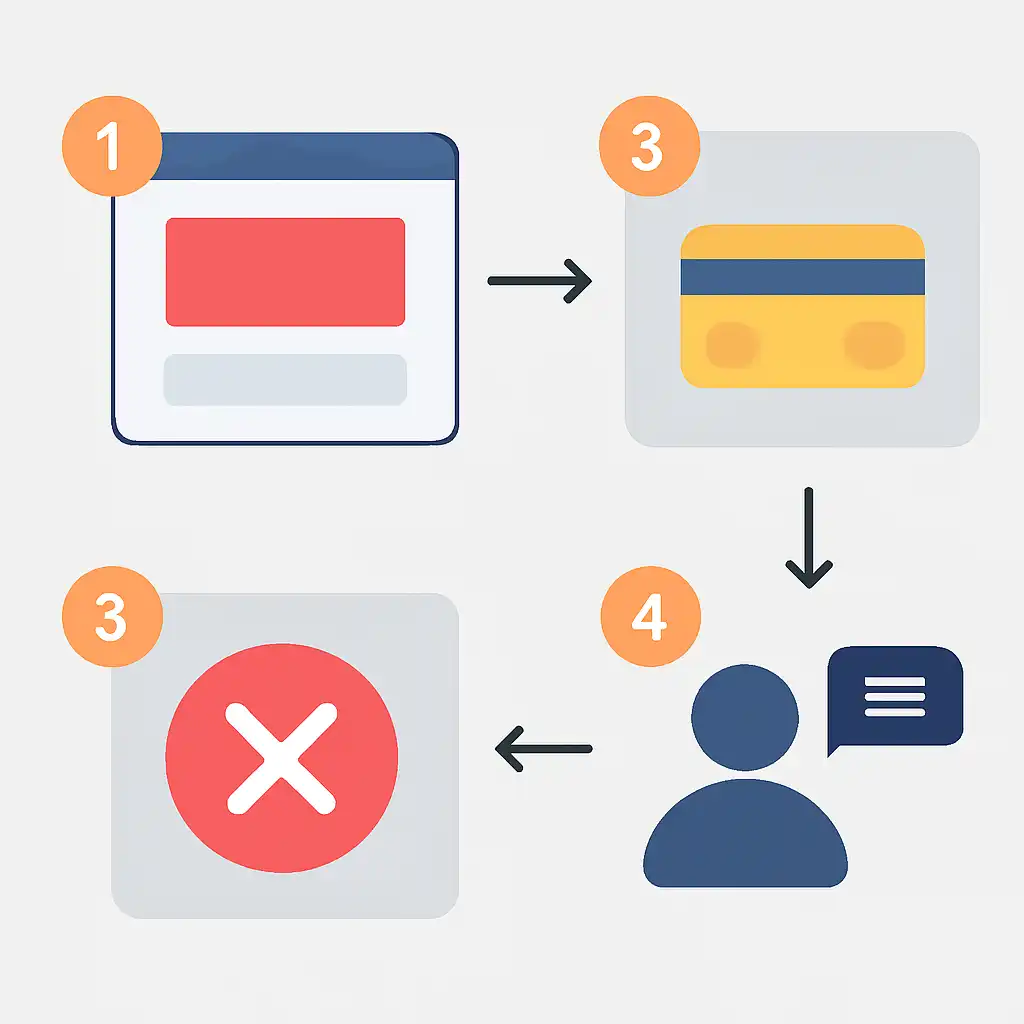
Understanding the mechanism behind uncontrolled depositing makes it easier to interrupt. The cycle typically unfolds in three stages.

Stage 1, The Anchor Loss
A player enters a Gogo Rummy cash table with a specific starting amount in mind but without a formal limit set in their account. They lose that amount faster than expected, variance in rummy can produce losing streaks even for skilled players. Because no limit exists, the response is immediate: deposit again.
Stage 2, The Bonus Distortion
Many rummy platforms, including Gogo Rummy, offer deposit-match bonuses as a percentage of the amount added. When a player is chasing losses, these bonus offers can create a false sense that depositing more is financially rational. In reality, the wagering requirement attached to any deposit-match bonus means the total amount that must be played through before the bonus converts to withdrawable cash is a multiple of the bonus itself, often three to five times.
Any sum deposited purely to unlock a bonus therefore generates additional table exposure that frequently exceeds the bonus value in total, especially when decisions are being made under emotional pressure rather than strategic calm. Always read the full terms of any current offer at the official Gogo Rummy website directly, as bonus structures and their wagering conditions change periodically.
Stage 3, The Session Boundary Collapse
Without a deposit limit, the concept of a "session" loses meaning. A player who intended to play for one hour and a fixed amount can end up three hours later having deposited four or five separate times. Each transaction felt small individually, but the cumulative spend may be far beyond what was mentally budgeted. This is the core harm: deposit limits do not restrict enjoyment, they restore the boundary between a session and a spiral.
How the Limit Feature Works on Gogo Rummy
Gogo Rummy's responsible gaming section allows players to set a deposit limit directly inside their account settings. Once set, the platform will not process a deposit request that would breach the cap within the chosen timeframe. A player who sets a daily limit of, for example, ₹1,000 (used here purely as an illustration, your chosen amount should reflect your personal budget) cannot deposit a rupee more until the 24-hour window resets, regardless of the size of any losses in the interim.
Increasing the limit is subject to a mandatory cooling-off delay, which exists precisely to prevent an emotional in-session override. To find the current steps for setting or adjusting your limit, visit the official Gogo Rummy website and navigate to the Responsible Gaming or Account Settings section.
Ignoring Deposit Limits, Safety and Timing
Why Timing Matters More Than Intention
Most players who intend to play responsibly do not plan to overspend, they plan to stop at a sensible point and then do not. The gap between intention and action is almost always widest during active play, when cognitive load is high, emotions are engaged, and each individual decision feels smaller than it is. Setting a deposit limit before a session starts, ideally when your account is new, or at minimum the night before you plan to play, removes the decision entirely from the moment when you are least equipped to make it well.
The Cooling-Off Delay Is a Feature, Not a Bug
Gogo Rummy applies a time delay before a requested increase to an existing deposit limit takes effect. Players sometimes experience this as frustrating. It is intentional. The delay means that if you are mid-session and emotionally escalating, you cannot immediately raise your own ceiling. By the time the increase would activate, the session is typically over, your emotional state has reset, and you can reconsider whether the higher limit reflects your genuine long-term budget or a heat-of-the-moment override. Platforms that apply no delay on limit increases offer significantly weaker player protection.
Stack Your Safety Layers
A deposit limit works best when combined with at least one other time or spend boundary. Gogo Rummy's responsible gaming tools also include session time reminders and the option to set loss limits. Using all three creates redundancy: if you lose track of time, the session reminder fires; if you are on a losing run, the loss limit intervenes; and if you try to reload funds to chase, the deposit limit blocks the route. Relying on any single control in isolation gives you one point of failure. Layering controls gives you genuine protection.
Warning Signs That a Limit Is Being Functionally Ignored
Even players who have technically set a limit sometimes circumvent its spirit by setting it unrealistically high, a number that will never actually be reached in a normal session and therefore provides no real constraint. A deposit limit is functioning correctly when it has stopped you at least once. If you have had a limit active for several weeks and it has never activated, the limit is probably set above your realistic session risk, not below it. Review it periodically and adjust downward if it has never been tested.
Ignoring Deposit Limits, Tips and FAQs
Practical Tips for Gogo Rummy Players
- Set your limit before your first deposit, not after your first loss. The best time to impose a financial boundary is before you have any emotional stake in the outcome of a session.
- Use your monthly disposable entertainment budget as the basis, not your session expectations. Work out what you can genuinely afford to lose across the whole month, then divide that figure by the number of sessions you plan to play. That per-session figure becomes your daily limit ceiling.
- Treat a limit refusal as information, not as an obstacle. When the platform declines a deposit because your limit is reached, the system is working. That is the correct outcome. Log out and return another day.
- Tell someone you trust what your limit is. Social accountability significantly increases adherence to self-imposed financial rules. Knowing another person is aware of your stated limit changes how it feels to try to override it.
- Review your transaction history weekly, not monthly. Gogo Rummy maintains a record of all deposits and withdrawals inside your account history section on the official website. Reviewing it weekly while the amounts are recent makes patterns visible before they become entrenched.
Can I remove a deposit limit entirely once I have set one?
Yes, but removal is treated the same as an increase, it is subject to a mandatory cooling-off period before it takes effect. This prevents impulsive removal during a losing session. The exact duration of the cooling-off period is stated in the Responsible Gaming section on the official Gogo Rummy website, as platform policies are reviewed and updated periodically.
Does a deposit limit affect my bonus eligibility?
A deposit limit does not automatically disqualify you from receiving a bonus on a qualifying deposit. It simply means that once your cumulative deposits within the chosen timeframe reach the cap, no further deposits will be processed until the period resets. If a promotional deposit would push you over your limit, that deposit will be declined. Plan your promotional deposits within your limit, not around it.

What if my limit feels too restrictive after I set it?
Sit with that feeling for at least 48 hours before deciding to raise it. If after two days, including at least one day when you are not actively thinking about rummy, you still believe the limit is genuinely too low for your disposable entertainment budget, you can request an increase through your account settings. The cooling-off delay gives you time to distinguish a considered decision from an emotional reaction.
Where can I get help if I feel my spending is out of control?
The National Problem Gambling Helpline in India is operated by the iGaming Federation and can be reached via their official website. The Vandrevala Foundation offers a 24-hour mental health helpline at 1860-2662-345. Both services are free, confidential, and available to anyone who feels their gaming habits are affecting their financial or personal wellbeing. Gogo Rummy's responsible gaming page on the official website also lists current support resources and self-exclusion options for players who need a longer break.
Is ignoring deposit limits a sign of addiction?
Not necessarily, but it is one of the earliest and most reliable behavioural markers that risk is elevated. Many players who eventually develop problematic gambling patterns identify, in retrospect, that the first change they noticed was repeatedly depositing more than they planned. Taking the limit feature seriously before a problem is established is far easier than trying to regain control once the habit is formed.